

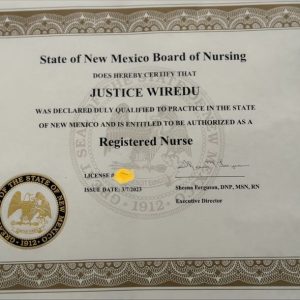
Buy nclex certificate
£1,500.00
The nursing license exam is a critical step toward building a successful healthcare career. Proper preparation, disciplined study habits, and strong clinical reasoning skills significantly improve the chances of passing successfully.
Candidates who invest time in understanding exam formats, practicing clinical judgment questions, and using high-quality review resources are more likely to achieve strong results on their first attempt.
With global demand for qualified nurses continuing to rise, earning your nursing license can lead to excellent career opportunities, professional stability, and long-term personal growth.
Whether you are preparing for the NCLEX-RN, NCLEX-PN, or another nursing licensure examination, starting your preparation early and following a strategic study plan can make a major difference in your success.
Nursing License Exam: Complete Guide to Passing Your Nursing Licensure Test
The nursing license exam is one of the most important milestones for aspiring nurses worldwide. Whether you are preparing for the NCLEX, practical nursing board exams, or another nursing certification assessment, understanding the process is essential for success.
Healthcare institutions are actively searching for qualified and licensed nurses, making nursing one of the fastest-growing professions globally. Passing your nursing licensure examination not only validates your medical knowledge and clinical skills but also opens the door to rewarding employment opportunities, higher salaries, and long-term career growth.
This comprehensive guide explains everything you need to know about the nursing license exam, including eligibility requirements, exam preparation strategies, registration procedures, study tips, common mistakes to avoid, and the best ways to improve your chances of passing on your first attempt.
What Is a Nursing License Exam?
A nursing license exam is a professional examination designed to evaluate whether a candidate possesses the required medical knowledge, patient care skills, and clinical judgment necessary to practice nursing safely and legally.
Most countries require nurses to pass an official nursing licensure examination before they can work in hospitals, clinics, rehabilitation centers, nursing homes, or private healthcare facilities.
Popular nursing licensing examinations include:
- NCLEX-RN (National Council Licensure Examination for Registered Nurses)
- NCLEX-PN (Practical Nurse Licensure Examination)
- Registered Nurse Board Exams
- International Nursing Competency Exams
- State Nursing Licensure Tests
- Nursing Council Certification Exams
These exams assess a candidate’s ability to:
- Deliver safe patient care
- Apply critical thinking skills
- Understand pharmacology and medication administration
- Follow ethical and legal nursing practices
- Respond to emergency situations
- Manage patient communication effectively
Why the Nursing License Exam Is Important
Passing the nursing license exam is mandatory in most healthcare systems because patient safety depends on competent and qualified professionals.
Benefits of Passing the Nursing Licensure Exam
Legal Authorization to Practice
Without a valid nursing license, candidates cannot legally work as professional nurses in most countries.
Better Career Opportunities
Licensed nurses have access to hospitals, government healthcare institutions, international healthcare organizations, and private medical facilities.
Higher Salary Potential
Registered and licensed nurses often earn significantly more than unlicensed healthcare workers.
International Job Opportunities
Many countries recognize standardized nursing exams, allowing nurses to work abroad after meeting immigration and licensing requirements.
Professional Credibility
A nursing license demonstrates competency, professionalism, and dedication to healthcare excellence.
Types of Nursing License Exams
Different countries and nursing levels require different examinations.
NCLEX-RN
The NCLEX-RN is one of the most recognized nursing licensure examinations globally. It is required for registered nurses in the United States and accepted in several international healthcare systems.
Topics covered include:
- Safe patient care
- Health promotion
- Psychosocial integrity
- Pharmacology
- Physiological adaptation
- Infection control
- Clinical judgment
NCLEX-PN
This examination is designed for practical or vocational nurses. It evaluates foundational nursing knowledge and patient care abilities.
State Nursing Board Exams
Many countries conduct national or state-level nursing board examinations for licensure approval.
International Nursing Exams
Internationally trained nurses may need additional assessments before working abroad. These exams verify competency and language proficiency.
Nursing License Exam Eligibility Requirements
Eligibility requirements vary depending on the country and licensing authority, but most applicants must meet the following criteria.
Nursing Education Completion
Candidates must graduate from an approved nursing education program such as:
- Bachelor of Science in Nursing (BSN)
- Associate Degree in Nursing (ADN)
- Diploma Nursing Program
- Practical Nursing Program
Clinical Training
Most licensing authorities require documented clinical practice hours completed during nursing education.
Background Verification
Applicants may undergo criminal background checks and identity verification procedures.
English Language Proficiency
International candidates may need to prove English proficiency through exams such as IELTS or TOEFL.
Application Approval
Candidates must submit official transcripts, identification documents, and registration fees before receiving authorization to test.
How to Register for a Nursing License Exam
Understanding the registration process can help avoid delays and application errors.
Step 1: Verify Eligibility
Check the requirements established by your nursing regulatory authority or nursing board.
Step 2: Submit Application Documents
Common documents include:
- Academic transcripts
- Passport or national ID
- Nursing school certificates
- Clinical training records
- Passport photographs
Step 3: Pay Examination Fees
Examination fees vary depending on the licensing authority and examination type.
Step 4: Receive Authorization to Test
Once approved, candidates receive an authorization notice allowing them to schedule the examination.
Step 5: Schedule the Exam
Choose an available testing center and examination date.
Nursing License Exam Format
The format of nursing licensure exams depends on the specific exam authority.
Computerized Adaptive Testing (CAT)
Many modern nursing exams use computerized adaptive testing. Questions become easier or harder depending on the candidate’s previous answers.
Multiple-Choice Questions
Most nursing exams include multiple-choice questions covering clinical scenarios and patient care.
Case Studies
Some exams require candidates to analyze patient conditions and make appropriate nursing decisions.
Medication Calculations
Candidates may solve dosage and medication administration problems.
Clinical Judgment Questions
Exams increasingly focus on evaluating real-world clinical reasoning skills.
Best Study Strategies for the Nursing License Exam
Preparing effectively is critical for exam success.
Create a Structured Study Plan
Develop a study schedule covering all exam subjects.
Recommended study categories include:
- Pharmacology
- Medical-surgical nursing
- Pediatrics
- Mental health nursing
- Maternal nursing
- Patient safety
- Infection control
Consistency is more effective than last-minute cramming.
Use Official Review Materials
Choose trusted exam preparation resources from recognized nursing education providers.
Practice Daily Questions
Daily practice questions improve:
- Critical thinking
- Time management
- Question interpretation
- Clinical reasoning
Take Full-Length Practice Exams
Simulated exams help build confidence and identify weak areas.
Join Study Groups
Collaborative learning can improve retention and motivation.
Focus on Clinical Judgment
Modern nursing exams prioritize safe decision-making over memorization alone.
Common Nursing License Exam Mistakes to Avoid
Many candidates fail because of avoidable mistakes.
Poor Time Management
Spending too much time on difficult questions can reduce overall performance.
Memorization Without Understanding
Understanding nursing concepts is more effective than memorizing isolated facts.
Ignoring Weak Subjects
Candidates should spend extra time improving weaker areas instead of focusing only on strengths.
Lack of Practice Testing
Practice exams are essential for building familiarity with exam formats.
Exam Anxiety
Stress and anxiety can negatively impact concentration and decision-making.
How to Pass the Nursing License Exam on the First Attempt
Passing on the first attempt saves time, money, and emotional stress.
Prioritize High-Yield Topics
Focus on frequently tested concepts such as:
- Pharmacology
- Patient safety
- Infection prevention
- Emergency care
- Delegation
- Ethical nursing practices
Master Question Analysis
Carefully identify keywords such as:
- First
- Best
- Most appropriate
- Priority
- Immediate action
These words significantly affect answer selection.
Practice Critical Thinking
Most nursing questions are scenario-based and require clinical reasoning.
Study Rationales
Understanding why answers are correct or incorrect improves long-term retention.
Sleep and Nutrition Matter
Mental performance improves significantly with proper rest and nutrition.
Nursing License Exam Preparation Resources
Several resources can improve preparation quality.
Online Nursing Review Courses
Digital learning platforms provide:
- Video lessons
- Practice exams
- Interactive quizzes
- Clinical case reviews
Nursing Review Books
Comprehensive review books remain valuable for structured learning.
Mobile Study Applications
Nursing exam apps provide flexible learning opportunities anywhere.
Tutor Support
Professional nursing tutors can help candidates struggling with specific subjects.
Career Opportunities After Passing the Nursing License Exam
Successfully passing the nursing license exam opens multiple healthcare career paths.
Registered Nurse (RN)
Registered nurses work in hospitals, emergency departments, surgical units, and clinics.
Intensive Care Nurse
ICU nurses manage critically ill patients requiring advanced care.
Pediatric Nurse
Pediatric nurses specialize in child healthcare and development.
Mental Health Nurse
Mental health nurses provide psychiatric and emotional support care.
Travel Nurse
Travel nurses work in different regions or countries under temporary assignments.
Nurse Educator
Experienced nurses may teach future nursing students.
Salary Expectations for Licensed Nurses
Nursing salaries vary depending on:
- Country
- Experience level
- Specialization
- Healthcare facility
- Certifications
Licensed nurses generally earn competitive salaries with strong job security and career advancement opportunities.
High-demand nursing specialties often receive additional compensation and benefits.
International Opportunities for Licensed Nurses
Licensed nurses are in demand worldwide.
Countries actively recruiting qualified nurses include:
- United States
- Canada
- United Kingdom
- Australia
- New Zealand
- Germany
- Ireland
International nursing careers may require:
- Credential evaluations
- Language proficiency tests
- Additional licensing exams
- Immigration processing
Future Trends in Nursing Licensure Exams
Healthcare systems continue evolving, and nursing exams are adapting accordingly.
Increased Focus on Clinical Judgment
Exams now emphasize decision-making skills and patient safety outcomes.
Technology-Based Testing
Remote learning and computerized testing systems are becoming more common.
Expanded Global Mobility
International licensing recognition is increasing in many regions.
Simulation-Based Assessments
Some healthcare systems are introducing clinical simulations to evaluate real-world competency.
Final Thoughts
The nursing license exam is a critical step toward building a successful healthcare career. Proper preparation, disciplined study habits, and strong clinical reasoning skills significantly improve the chances of passing successfully.
Candidates who invest time in understanding exam formats, practicing clinical judgment questions, and using high-quality review resources are more likely to achieve strong results on their first attempt.
With global demand for qualified nurses continuing to rise, earning your nursing license can lead to excellent career opportunities, professional stability, and long-term personal growth.
Whether you are preparing for the NCLEX-RN, NCLEX-PN, or another nursing licensure examination, starting your preparation early and following a strategic study plan can make a major difference in your success.
Be the first to review “Buy nclex certificate”
Related products

NCLEX CERTIFICATE FOR SALE

NCLEX CERTIFICATE FOR SALE
NCLEX CERTIFICATE FOR SALE
NCLEX CERTIFICATE FOR SALE
NCLEX CERTIFICATE FOR SALE
NCLEX CERTIFICATE FOR SALE
Reviews
There are no reviews yet.